








Introduction
Brazing has played a vital role in joining metals across industrial manufacturing for decades. It involves melting a filler metal into the joint, which then solidifies to form a strong bond between components. With recent innovations, this technique is experiencing a renaissance, providing not just stronger, more reliable joints but also reducing production times and energy consumption across industries from automotive to HVAC. For companies focusing on high-performance products, such as brazing aluminum condenser coils, these advancements are increasingly critical to competitive success and process improvement.
Modern manufacturing depends on robust joining methods, and the evolution of brazing is leading to new benchmarks in quality and efficiency. As manufacturers contend with market demands and tighter regulatory requirements, the adoption of next-generation brazing solutions is becoming a driving force for innovation. These advancements are recognized for their ability to reduce waste, save costs, and deliver highly reliable performance even in the most demanding environments.
In recent years, the industry has witnessed a surge in research and practical applications of smart brazing technologies. By closely monitoring every step and leveraging real-time data, manufacturers are improving yields and reducing error rates, key outcomes for maintaining a competitive edge in the global market. The transformative changes currently underway are truly setting the stage for a new era in industrial manufacturing.
For additional insights into engineering-related innovations in metal joining, authoritative sources such as Wikipedia’s brazing article provide detailed overviews for both seasoned engineers and newcomers to the field.
Automation and AI Integration
The impact of automation and artificial intelligence (AI) in brazing is both profound and measurable. Automated equipment outfitted with AI and machine learning algorithms enables shops to monitor key process indicators, optimize for productivity, and even anticipate potential failures before they interrupt production. As a result, industries that integrate these technologies report significant reductions in operational costs and increased output. For instance, productivity improvements of up to 30 percent have been observed in facilities that deploy fully automated and AI-driven brazing lines.
With AI-assisted brazing systems, tasks that once depended heavily on skilled manual labor can now be handled faster and more consistently. This not only boosts throughput but also minimizes joint quality variability. Such repeatability is particularly important in high-volume sectors such as electronics and automotive, where joint integrity is critical to overall product reliability.
Eco-Friendly Brazing Materials
Increasing attention to sustainability and safety is fostering a movement toward eco-friendly brazing materials. Traditional alloys often contained lead or cadmium, both of which pose health and environmental hazards. Today’s regulations, including the European Union’s Restriction of Hazardous Substances (RoHS) directive, are encouraging manufacturers to pivot toward lead-free and cadmium-free alloys.
Switching to safer alternatives not only helps organizations comply with legal requirements but also supports the global push for greener manufacturing. Workers benefit from improved air quality in production environments, while final products are more easily recyclable and less hazardous at end-of-life disposal. Manufacturers are finding that adopting these materials can also boost their reputation in markets where sustainable practices influence purchasing decisions.
Laser Brazing: Precision and Efficiency
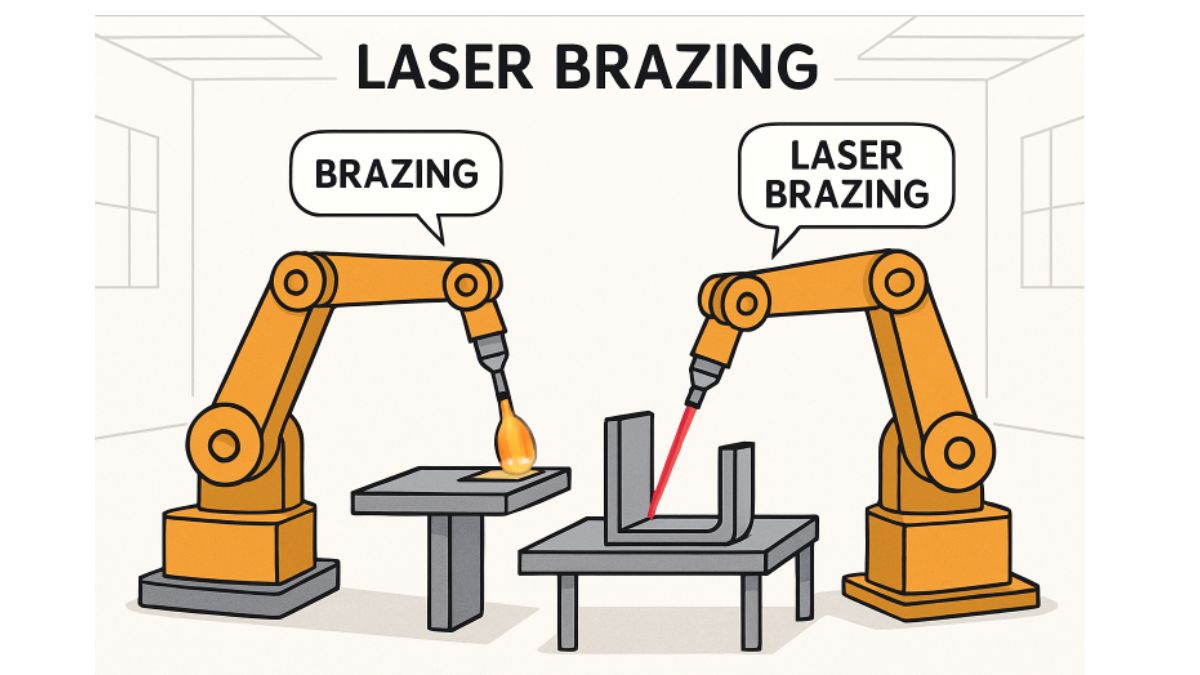
Laser brazing is at the forefront of the industry’s efforts to improve output quality and process control. By focusing a high-energy laser beam on the joint, the process achieves clean fusion with minimal thermal distortion. Automotive manufacturers have been quick to adopt this technology because it produces joints that are visually appealing, structurally robust, and are produced much faster than with traditional torch brazing.
The small, precisely defined heat-affected zone resulting from laser brazing reduces the risk of warping delicate parts or damaging heat-sensitive components. Another benefit is enhanced worker safety; since lasers replace open flames, the chance of accidental fires or burns is greatly reduced. As vehicle designs become more intricate, these advantages become more pronounced, supporting manufacturers’ goals of lightweighting and improved fuel efficiency.
Hydrogen Brazing: Clean and High-Integrity Joints
Hydrogen brazing employs a controlled atmosphere of high-purity hydrogen gas, which serves as a reducing agent to prevent oxide formation on metal surfaces. This provides two key benefits: it produces exceptionally clean joints and enhances the wettability of the braze alloy, ensuring an even and reliable bond. In industries where leak prevention is paramount, such as aerospace and medical devices, the bright, oxide-free results of hydrogen brazing meet or exceed even the strictest quality standards.
The demand for hydrogen brazing is expected to rise as these industries pursue miniaturization and higher cleanliness standards. The process is often conducted in vacuum furnaces, which further improves consistency and joint reliability by eliminating fluctuations in atmospheric pressure and contamination risks.
Impact on the Automotive Industry
The automotive sector is a leading adopter of innovative brazing technologies, spanning the production of radiators and heat exchangers to the fabrication of advanced body-in-white structures. According to market analysis, the brazing strips segment alone is projected to grow from $18.9 billion in 2025 to $30.0 billion by 2035. This growth represents a compound annual growth rate (CAGR) of 4.7 percent and underscores the growing importance of brazing solutions in the automotive industry.
The shift toward electric vehicles (EVs) and the integration of lightweight components rely heavily on advanced brazing to create secure, conductive joints with minimal added mass. As automotive manufacturers seek ways to reduce carbon footprints while increasing vehicle durability and efficiency, innovative brazing remains a cornerstone technology.
Future Outlook
The future of brazing in industrial manufacturing is poised to reach new heights as research and development continue at a rapid pace. Technologies like vacuum furnace brazing offer highly controlled environments and uniform heating, resulting in extremely consistent joint quality. These techniques are especially valuable in sectors that require repeatable results, such as aerospace, electronics, and advanced energy systems.
Industry observers anticipate even greater integration of digital monitoring and control systems, elevating brazing to new levels of productivity and sustainability. As manufacturers aim to boost performance while adhering to environmental laws, the expectation is that these innovations will set new benchmarks across the board.
Conclusion
Innovative brazing technologies are laying the groundwork for the next generation of industrial manufacturing. They are redefining efficiency, precision, and sustainability by embracing automation, AI, and environmentally conscious materials, as well as groundbreaking developments such as laser and hydrogen brazing. As these advancements become more widespread, they will support continuous improvement and set new industry standards, ensuring brazing remains integral to high-quality manufacturing for years to come.
For more in-depth analysis of manufacturing advancements and market trends, consult resources such as IndustryWeek’s Technology and IIoT section.