








Importance of Civic Education for Children
Civic education during childhood creates the groundwork for a lifetime of active citizenship. When children are given the tools to understand how their community and government operate, they not only gain confidence but also recognize their capacity to make a difference. This sense of empowerment makes civic engagement accessible and realistic, not just an abstract idea. Books and media tailored to young readers play a crucial role in this process, offering approachable ways to discuss civic values and responsibilities. For families interested in broadening their children’s learning experiences, children’s language learning books can also introduce wider world perspectives and empathetic communication skills.
It’s important for children to start learning about their civic responsibilities early. Early civic education boosts lifelong democratic involvement like voting and volunteering. Parents and teachers should nurture curiosity and respect for diverse viewpoints to develop respectful, informed community members. Civic education isn’t just about government mechanics; it also builds critical thinking and ethics. When children question and explore civic rules, they grow into accountable adults. Making civic lessons relevant by connecting them to schools and neighborhoods increases engagement. Stories and interactive activities can make civics engaging and relatable, helping children see themselves as leaders and changemakers, and making the learning meaningful.
Role of Storytelling in Education
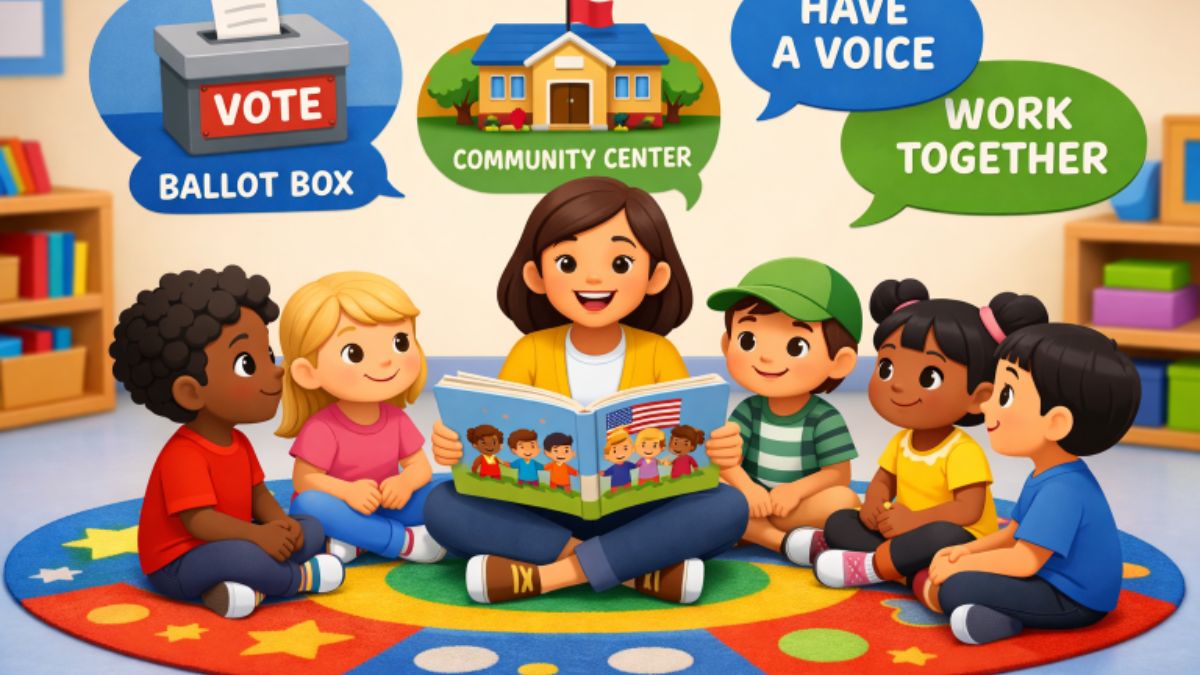
Storytelling has an unparalleled ability to capture a child’s imagination and make new concepts memorable. Narratives provide emotional connections, so children are more likely to internalize lessons and values embedded in the stories. When educators and parents use stories to introduce political structures or voting processes, children see these ideas come alive through characters and their journeys.
Stories are powerful because they embed important information within relatable experiences. By witnessing characters navigate dilemmas, make decisions, and experience consequences, children gain a deeper understanding of real-world civic processes. This narrative immersion builds empathy, cultural understanding, and the ability to see multiple perspectives—essential qualities for thoughtful citizenship.
Simplifying Political Concepts Through Narratives
Complex topics such as elections, leadership, and civic duties can be daunting for young children. Carefully crafted stories convert these big ideas into manageable, relatable situations. For example, a story about a class electing a field trip destination introduces voting and consensus-building without overwhelming the reader with complicated terminology.
Characters and storylines act as guides, illustrating cause and effect and showing how individual actions contribute to collective outcomes. These examples help children grasp the importance of participation and the effects of civic-minded behavior on a group. In this way, stories become bridges between theoretical knowledge and everyday life.
Examples of Effective Civic Education Books
- “How to Become President” by Erika Nielsen. This engaging tale uses humor and real-life analogies to describe the election process, emphasizing the importance of resilience, honesty, and self-control for leaders. More information is available on the author’s website: Erika Nielsen Books.
- “Grace for President” by Kelly DiPucchio. The book introduces the Electoral College concept through a relatable school election, allowing kids to follow along without getting lost in the complexity.
- “Vote for Our Future!” by Margaret McNamara. Through a community-driven narrative, this story highlights the power of every individual’s vote and the process of creating positive change.
- “What If Everybody Did That?” by Ellen Javernick. Focusing on small actions and their larger consequences, this book encourages discussions about responsibility and social norms, connecting personal choices to community outcomes.
For parents and teachers seeking more options, The New York Public Library offers a comprehensive list of children’s books that thoughtfully approach civic themes.
Benefits of Early Civic Engagement
Children who regularly learn about civics are more likely to develop strong communication, reasoning, and leadership skills. Early exposure to civic lessons helps children become more self-aware and community-oriented. They are better equipped to resolve conflicts, work collaboratively, and show respect for diverse opinions.
Multiple studies confirm that children educated in civic participation are significantly more inclined to vote, volunteer, and support others in adulthood. Civic lessons in early life help break barriers to participation by normalizing volunteering, engagement, and advocacy. This builds more resilient and responsive communities and strengthens the foundations of democratic societies.
Tips for Parents and Educators
- Choose age-appropriate books that introduce civic concepts in an engaging way.
- Discuss stories with children and find ways to relate them to current or local events.
- Encourage open-ended questions and be willing to address difficult topics honestly and with nuance.
- Participate in activities such as voting simulations, volunteer projects, or local events together to model civic behavior.
- Foster respectful dialogue at home or in the classroom, helping children express differing opinions constructively.
Challenges in Teaching Civics to Children
One major challenge lies in presenting civic topics without personal or political bias. It is important to create space for children to form their own opinions, rather than have them echo those of adults. Achieving the right balance between simplification and oversimplification is equally crucial, as children need both accurate information and clarity.
Using diverse stories and examples from various backgrounds helps relieve some of these challenges, allowing children to see a range of perspectives. Teachers and parents should remain open to ongoing conversations as children’s understanding grows and becomes more nuanced with age.
Conclusion
Storytelling transforms civic education into an experience that is both meaningful and memorable. By weaving civic principles into narratives, we empower children to become thoughtful, capable, and engaged citizens. Giving young readers the skills and knowledge for lifelong participation safeguards the future of our communities and ensures the vibrancy of our democracy.